
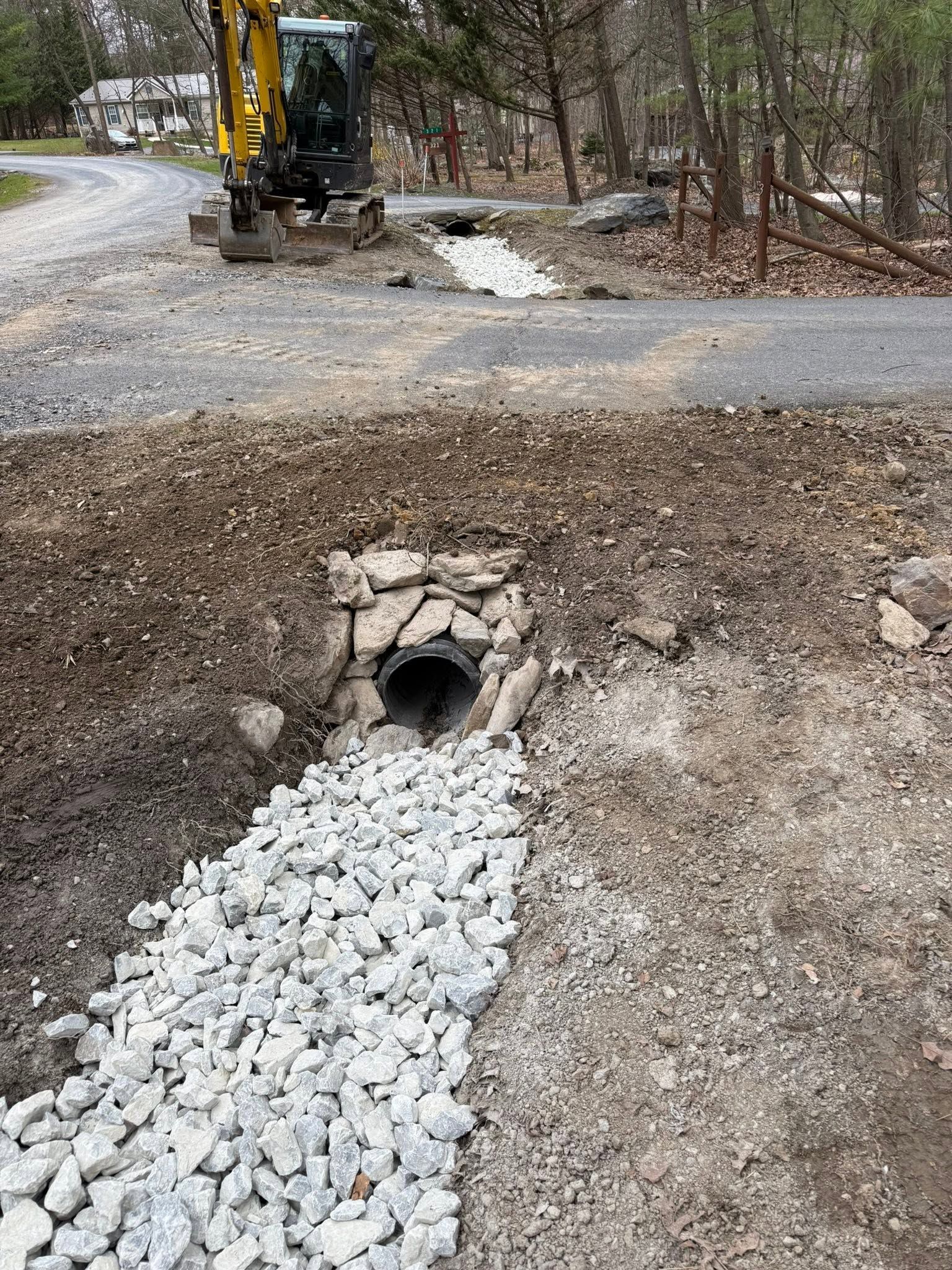
Culvert Systems Built for Seasonal Water Flow
Culvert installation and repair in Franklin County for managing drainage lines, driveway crossings, and seasonal runoff
Regional drainage patterns and seasonal water flow in Franklin County require culvert sizing and placement that handles peak flow during spring runoff and heavy rain events, not just average conditions. When culverts are undersized or improperly positioned, water backs up during storms and washes out driveways, erodes soil around the culvert ends, or floods low-lying areas that should remain dry. Freeze-thaw cycles further stress culvert materials, causing joints to separate and metal culverts to corrode at points where water pools inside the pipe.
TCK Land Services LLC installs and repairs culverts for residential and commercial properties, coordinating culvert work with site drainage plans and grading to maintain proper flow from inlet to outlet. Sizing accounts for watershed area upstream of the culvert, and placement ensures water enters and exits without creating erosion or sediment buildup that reduces flow capacity over time.
Arrange an evaluation to determine current culvert condition and whether sizing matches actual water flow on your property.
What Changes After Culvert Work Is Completed
Culvert installation involves excavating the crossing area to proper depth, bedding the culvert on compacted aggregate or stable soil, and backfilling with material that prevents settling while allowing water to drain away from the pipe. Inlet and outlet ends are stabilized with riprap or headwalls to prevent erosion that undercuts the culvert and causes driveway or road collapse. Repair work addresses damaged sections, separated joints, or sediment blockages that reduce flow capacity.
After installation or repair, water moves through the culvert without backing up during storms, driveway crossings remain stable without settling or washouts, and erosion around culvert ends stops because water exits at controlled velocity onto stabilized areas. Properly sized culverts continue to function even during peak flow events that would overwhelm undersized systems, preventing the flooding and erosion damage that requires emergency repairs and site restoration.
Culvert projects often connect to broader drainage improvements when water from multiple areas converges at a single crossing point. Replacement decisions depend on whether existing culverts are structurally sound but undersized, or whether corrosion and joint separation have compromised the pipe itself, requiring full removal and reinstallation with updated sizing.
Answers to Frequent Culvert Questions
Culvert installation and repair in Franklin County involves decisions about sizing, materials, and integration with existing drainage systems that affect long-term performance.
How is culvert size determined for a property?
Culvert size is calculated based on watershed area, expected peak flow during storm events, and downstream capacity to handle discharged water without causing flooding or erosion on adjacent properties or roadways.
What causes culverts to fail in this region?
Freeze-thaw cycles cause joints to separate and metal to corrode, while undersized culverts experience erosion around the ends from high-velocity discharge, and sediment accumulation reduces flow capacity when upstream erosion washes soil into the pipe.
When should culverts be repaired versus replaced?
Culverts with separated joints, corroded sections, or structural damage require replacement, while those with sediment blockages or minor erosion around the ends can often be repaired by cleaning the pipe and stabilizing inlet and outlet areas with riprap.
What materials are used for culvert installation?
Culvert materials include corrugated metal pipe, plastic pipe, and concrete pipe, with selection based on expected lifespan, soil corrosivity, and flow volume, though metal culverts in high-moisture soils typically corrode faster than plastic alternatives.
How does culvert placement affect driveway stability?
Culverts installed too shallow or without proper bedding settle under vehicle weight, causing driveways to sag or crack, while culverts placed at incorrect grades trap water inside the pipe and reduce flow capacity during storms.
TCK Land Services LLC coordinates culvert installation and repair with drainage system design and site grading to maintain proper water flow across the entire property. Request an on-site review to assess current culvert performance and determine whether sizing and placement meet your property's drainage needs.