
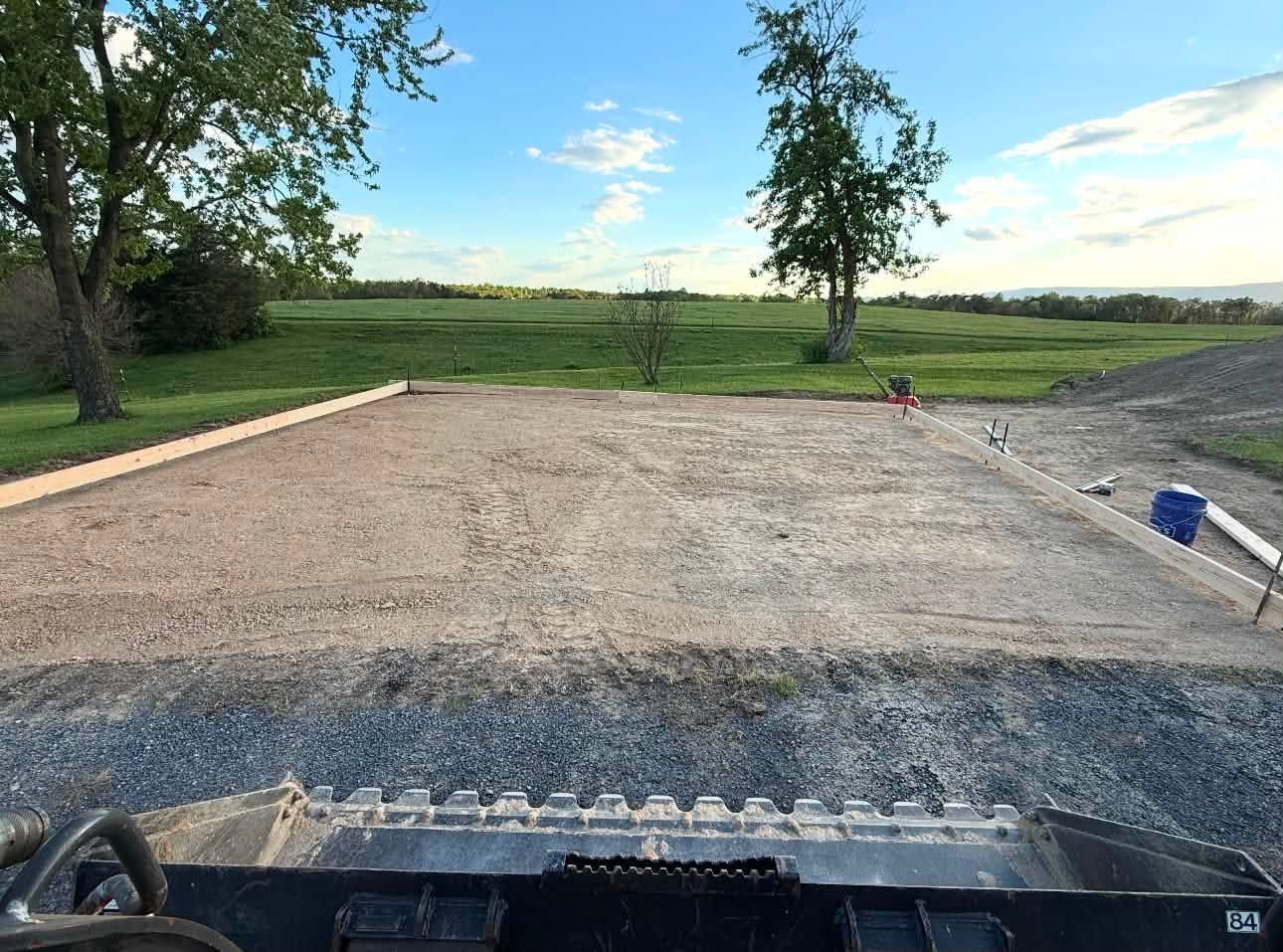
Surfaces Finished to Specification and Slope
Final Grading in Orrstown for new construction projects requiring precise surface elevation and drainage control
Precision grading determines whether water drains away from structures or pools against foundations, and whether driveways shed runoff or collect ice during freeze-thaw cycles common across Franklin County. Final grading work follows foundation installation and framing, shaping the surface to specifications that control water movement and prepare the site for landscaping or paving. TCK Land Services LLC performs final grading across Orrstown and surrounding counties, working to plan elevations that account for post-rain compaction and regional soil behavior after seasonal moisture changes.
This phase refines rough grade elevations set during site preparation, compacting fill material and shaping surfaces to match engineered drainage plans. The work includes grading around foundation walls to create positive slope away from the structure, smoothing driveway and walkway subgrades, and establishing swale depths that channel storm runoff toward designated drainage points. Material sourcing decisions factor in cross-border tax implications near the Maryland state line, where aggregate costs vary based on supplier location.
Request an estimate to review grading specifications and schedule work based on your construction progress.
What Changes After Final Grading Completes
Final grading brings the site to finished elevations, compacted and sloped according to drawings that specify drainage direction and surface plane. Equipment passes establish uniform density across fill areas, eliminating soft spots that would settle unevenly under driveways or patios. Swales and drainage channels are shaped to depth and width that handle storm volumes typical of the region, preventing washouts during heavy rain events that saturate soil and overwhelm undersized drainage paths.
Once grading is finished, water flows visibly away from the structure during rainfall, following defined channels rather than pooling in low spots or running toward the foundation. The surface is smooth and uniform, ready for sod, seed, or hardscape installation without additional fill or rework. Driveway and walkway subgrades are compacted to density that prevents rutting or settling after paving, and transitions between graded areas and natural terrain are shaped to prevent erosion at grade breaks.
Final grading does not include topsoil placement, seeding, or paving—those finishes are applied after the subgrade is inspected and approved. Properties with clay-heavy soil or areas that remain wet after storms may require subsurface drainage installation before final grading can achieve stable, long-term surface conditions. Compaction testing may be required by local building codes to verify that fill material meets density specifications before hardscape or landscaping work proceeds.
Common Questions About This Service
Property owners finishing construction projects often ask about timing, drainage requirements, and how final grading differs from earlier site work.
What's the difference between rough grading and final grading?
Rough grading establishes site elevation and drainage direction before construction begins, while final grading refines surfaces to precise specifications after the structure is built, compacting and smoothing areas for landscaping or paving.
How is drainage slope verified during final grading?
Grades are checked with laser levels and compared to plan specifications, ensuring that surfaces slope away from foundations at the required pitch and that swales are deep enough to handle regional storm runoff without overflowing.
When should final grading happen in the construction timeline?
Final grading occurs after foundation, framing, and major utility work are complete but before landscaping, paving, or topsoil placement begins, allowing the subgrade to be inspected and adjusted without interference from finish materials.
What site conditions in Orrstown affect grading work?
Post-rain compaction challenges and freeze-thaw cycles influence material behavior, requiring grading schedules that allow soil to stabilize between weather events and avoid working on saturated ground that won't compact properly.
How does final grading prevent foundation problems?
Proper slope directs water away from basement walls and slab edges, preventing hydrostatic pressure buildup, soil erosion near footings, and moisture infiltration that leads to cracking or settlement over time.
TCK Land Services LLC completes final grading to plan specifications across Franklin, Cumberland, Adams, and Perry Counties, addressing the soil and weather conditions that affect long-term surface stability. Schedule grading work once structural and utility phases are complete and ready for surface finishing.