
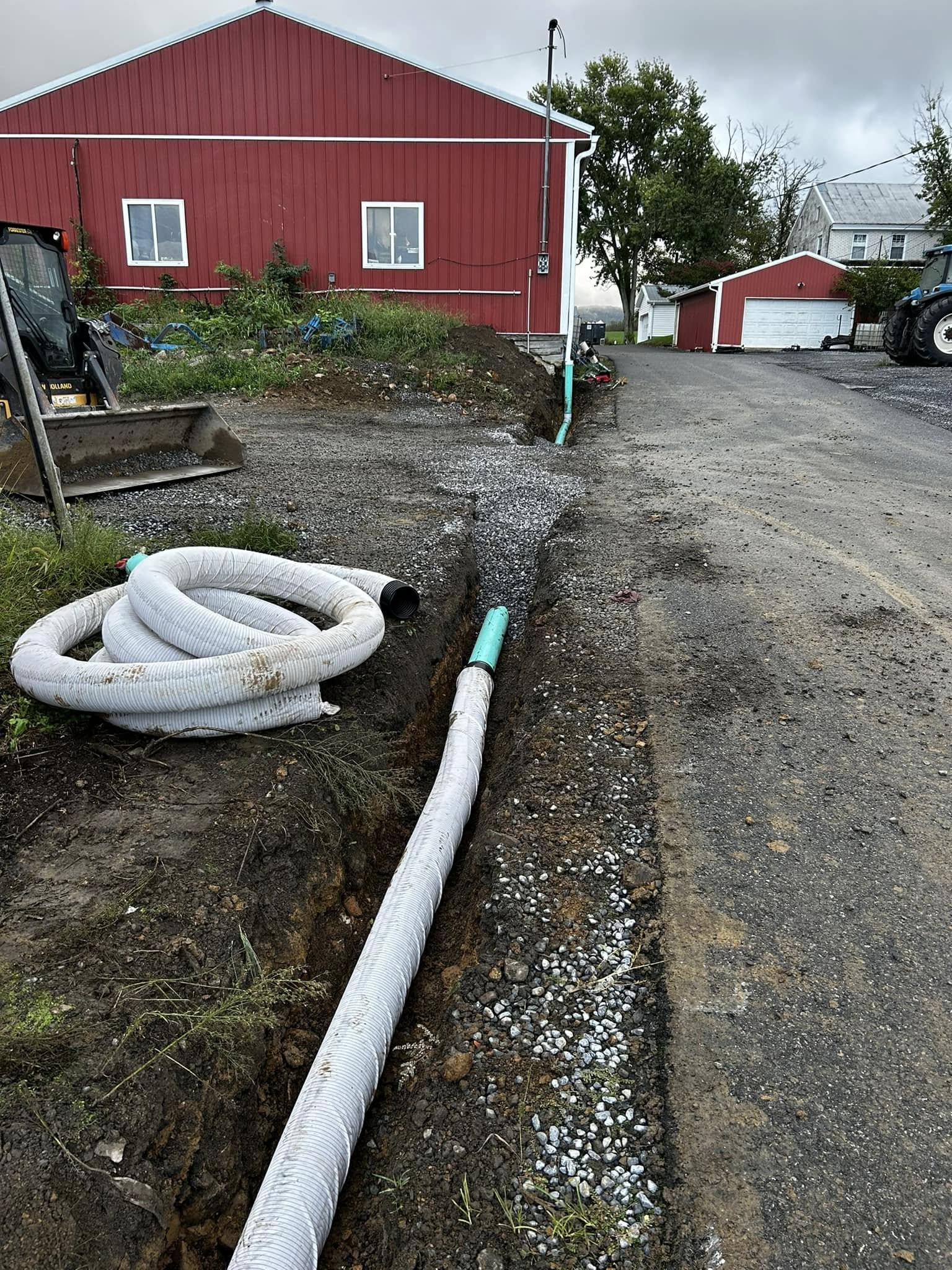
Water Management That Prevents Site Flooding
Drainage improvements in Franklin County for managing runoff, preventing pooling, and protecting structures
Frequent unexpected rain and forecasting challenges in Franklin County make proper drainage systems critical for protecting residential and commercial sites from water damage. TCK Land Services LLC designs and installs drainage systems that manage water flow based on regional rainfall volume and soil drainage capacity, which varies widely depending on clay content and compaction from previous site use. The difference between functional drainage and recurring flooding often comes down to whether the system accounts for peak flow during multi-day rain events rather than average conditions.
Drainage improvements include swales, French drains, grading for runoff control, and culvert integration that redirects water away from foundations, driveways, and low-lying areas. Each method addresses different flow volumes and site topography, and the choice depends on how much water accumulates during storms and where it needs to discharge without causing erosion or flooding neighboring properties.
Request a detailed site assessment to identify current water flow patterns and drainage failure points.
How Drainage Systems Address Regional Rainfall Volume
Drainage design in this region accounts for sudden rainfall that exceeds forecasted amounts, which causes systems sized for average conditions to overflow. Swales are graded to specific slopes that move water at controlled speeds without eroding soil, French drains are installed with aggregate that maintains permeability even when surrounding soil becomes saturated, and grading adjustments redirect sheet flow before it concentrates into channels that carve gullies across the site.
Once drainage improvements are completed, you'll notice water no longer pools near foundations after storms, runoff moves predictably toward designated discharge points instead of cutting random paths across the property, and previously muddy areas dry out faster because subsurface drains remove standing water within hours rather than days. The system continues to function during back-to-back rain events because it's designed for peak flow rather than typical conditions.
Drainage projects often integrate with site grading and excavation work when land clearing exposes new drainage patterns or when foundation work requires managing water before construction begins. Systems installed without accounting for soil drainage capacity or regional rainfall intensity typically fail during the first significant storm, requiring redesign and reinstallation at additional cost.
Common Drainage Questions from Site Owners
Property owners in Franklin County often ask about drainage solutions, installation timelines, and what makes systems effective during unexpected heavy rainfall.
What drainage solution works best for clay soil?
French drains with properly sized aggregate work in clay soil by creating a high-permeability channel that intercepts water before it saturates the surrounding clay, though discharge points must be carefully located to prevent water from pooling at the drain outlet.
How does grading improve drainage without installing pipes?
Grading reshapes the land surface to create positive slope away from structures and toward natural or constructed discharge points, moving sheet flow before it concentrates into erosive channels that damage topsoil and vegetation.
When should drainage improvements be scheduled?
Drainage work is best completed during dry periods when soil conditions allow accurate grading and trench excavation, though emergency repairs after flooding may require work during less-than-ideal conditions with additional stabilization measures.
What happens if drainage systems are undersized?
Undersized drainage systems overflow during heavy rain, causing water to back up toward structures or create new flow paths that erode soil and undermine foundations, driveways, and landscaping installed after the drainage work.
How do swales differ from French drains?
Swales are shallow surface channels that move visible water across the landscape at controlled speeds, while French drains are subsurface systems that intercept groundwater and remove it before it surfaces, and both can be used together for comprehensive water management.
TCK Land Services LLC integrates drainage improvements with site preparation and grading workflows to address water management before it disrupts other construction phases or causes regulatory compliance issues. Schedule a property evaluation to map current drainage problems and review solution options based on your site's topography and soil conditions.