
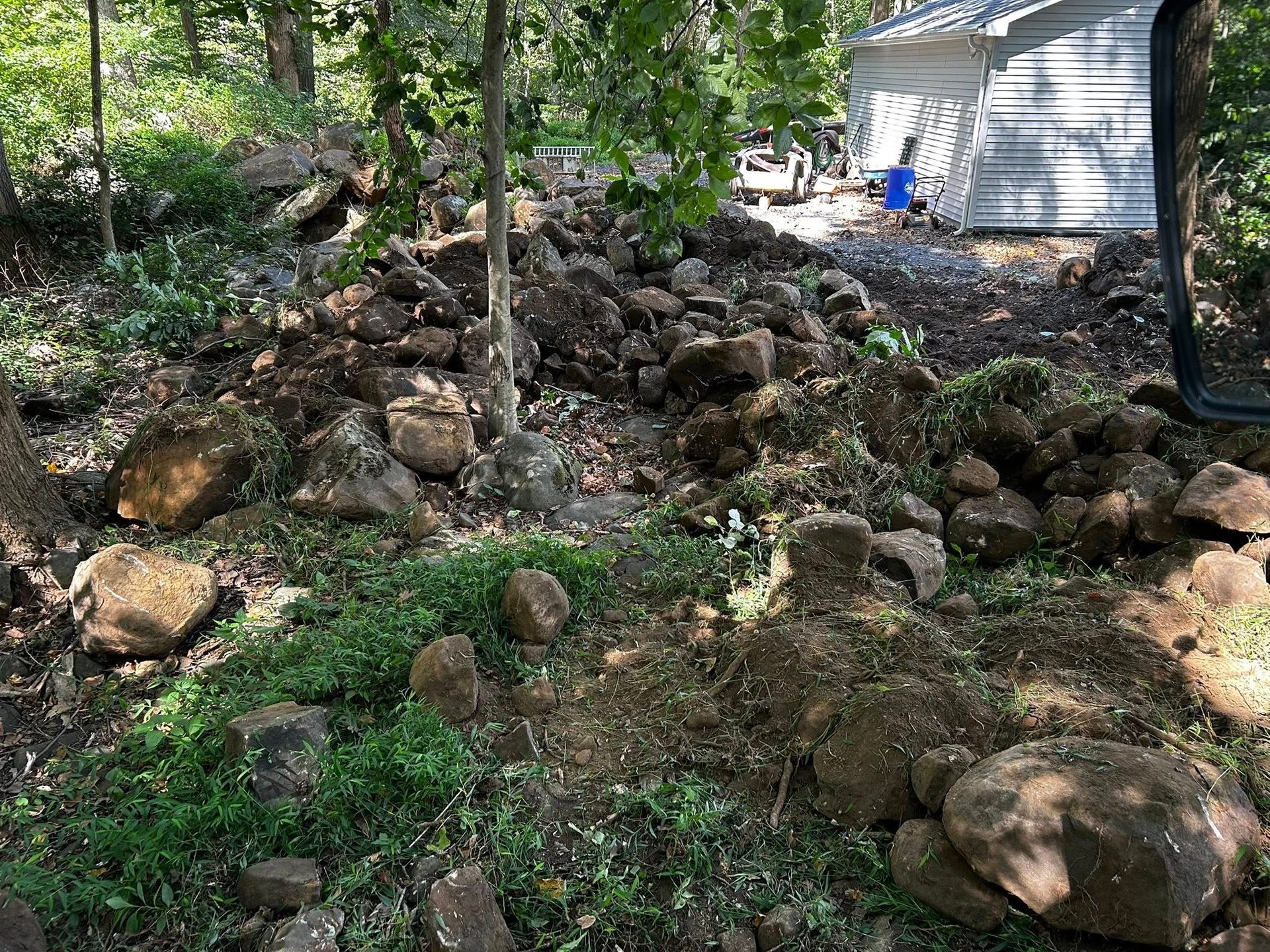
Aggregate Material Processed On-Site for Reuse
Rock Grinding in Orrstown for properties requiring crushed stone aggregate and base material sourcing
Rock and stone excavated during site work can be ground into reusable aggregate rather than hauled off, reducing material costs and eliminating disposal fees on projects where base prep or finish applications require crushed stone. TCK Land Services LLC grinds rock on-site or at off-site locations across Franklin County, processing material into gradations suitable for driveway base, drainage channels, or compacted fill. Cross-border work near the Maryland state line introduces tax implications that affect whether sourcing crushed material locally or grinding on-site offers better cost control for clients managing aggregate-heavy projects.
The process uses grinding equipment that crushes rock into specified size ranges, separating fines from larger aggregate and screening material to match application requirements. On properties where ledge or large stone is encountered during excavation, grinding converts obstacles into usable material that would otherwise require trucking and tipping fees. Regional aggregate demand keeps purchased stone costs elevated, making on-site grinding economically favorable when quantities exceed several truckloads.
Schedule a material assessment to determine whether on-site grinding reduces costs for your project's aggregate needs.
Why Rock Grinding Works for Material-Intensive Projects
Grinding operations convert unmarketable boulders and excavated stone into gradations that serve as compactable base, drainage media, or surface material for roads and pads. The equipment crushes rock to uniform size, creating angular edges that interlock under compaction and resist shifting better than rounded river stone. Material stays on-site, eliminating trucking delays and allowing grading work to proceed without waiting for aggregate deliveries that may be delayed by weather or supplier schedules.
After grinding is complete, you'll have stockpiled aggregate sized for immediate use in base layers, drainage channels, or access roads, eliminating the cost of purchasing and hauling equivalent material from off-site quarries. Projects requiring large volumes of crushed stone—such as long driveways, drainage fields, or multi-acre site preparation—see the greatest cost benefit from grinding rock already present on the property. The material integrates directly into subsequent grading and compaction phases without coordination gaps.
Grinding does not replace imported material when specific stone types, clean fill, or certified aggregate is required by engineering specifications. Properties with minimal rock or small stone scattered across the site may not generate enough material to justify grinding equipment mobilization. Grinding schedules coordinate with excavation phases to process material as it's uncovered, avoiding double-handling and minimizing stockpile footprint during active construction.
Answers to Frequent Service Questions
Property owners managing excavation and site work often ask about material reuse, cost comparisons, and when grinding makes sense for their project.
What size aggregate can rock grinding produce?
Grinding equipment processes stone into ranges from fine screenings up through 3-inch base material, with size controlled by screen selection and crusher settings to match base prep, drainage, or road surface applications.
How much does rock grinding cost compared to purchasing aggregate?
Grinding becomes cost-effective when the volume of excavated rock exceeds the mobilization cost of grinding equipment, typically on projects requiring 50 or more tons of crushed material that would otherwise be purchased and trucked in.
What types of rock are suitable for grinding into aggregate?
Most sedimentary and metamorphic rock common in Franklin County—including limestone, shale, and sandstone—grind into usable aggregate, though very soft or fractured material may not compact well in structural applications.
When should grinding happen during site work in Orrstown?
Grinding is scheduled after excavation uncovers rock but before grading and base prep begin, allowing freshly crushed material to be spread and compacted immediately without additional handling or storage.
What happens to material that's not suitable for reuse?
Oversize stone, contaminated material, or rock types that don't meet compaction requirements are separated during grinding and hauled off for disposal, keeping only aggregate that performs in the intended application.
TCK Land Services LLC processes rock and stone into reusable aggregate for site work across Franklin, Cumberland, Adams, and Perry Counties, reducing material costs on excavation-heavy projects. Contact us to evaluate whether grinding excavated rock offers cost savings for your aggregate requirements.